
The Day Cash Accounting Stops Working for Shopify Sellers
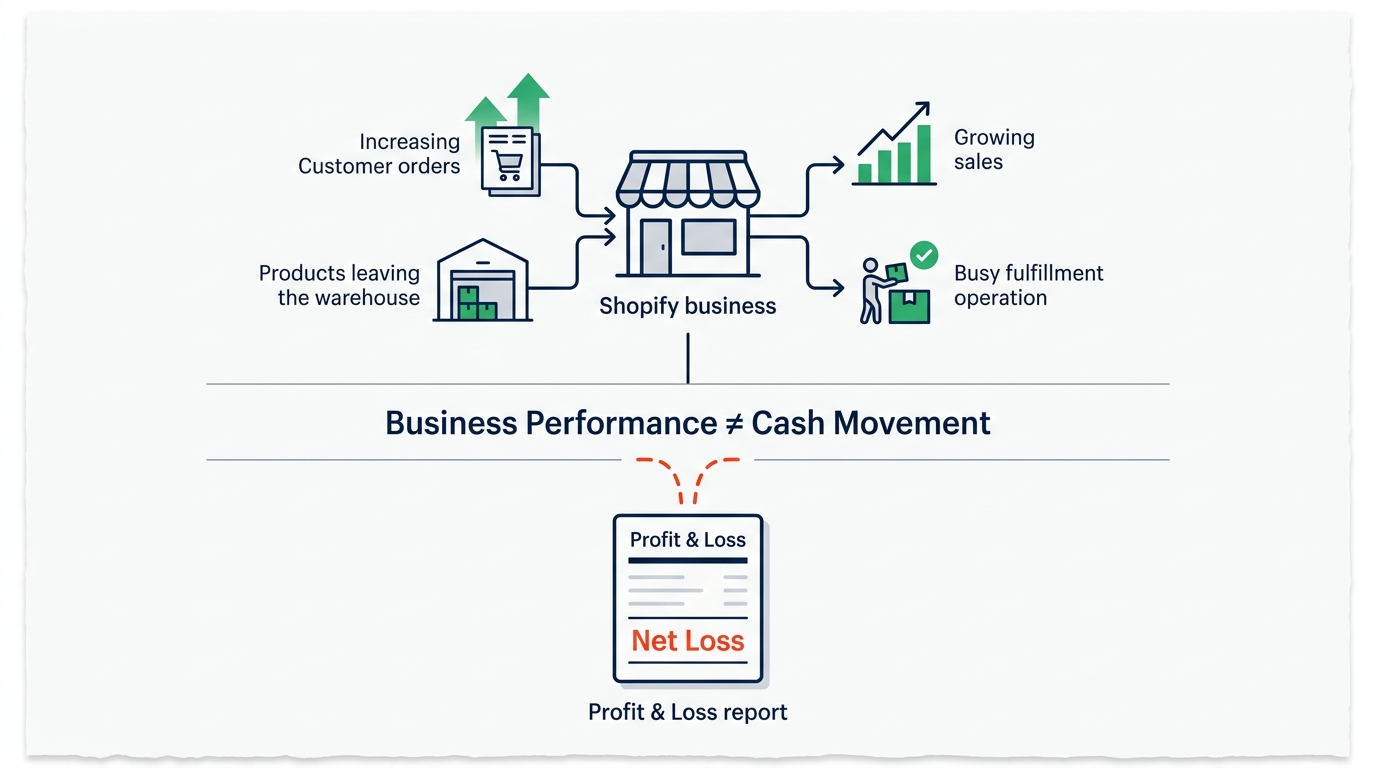
A Shopify store can have its biggest sales month ever and still report a loss.
Nothing is wrong with the business. Customers are buying. Product is moving off the shelves faster than ever. The founder isn’t sleeping less because something broke — they’re not sleeping because everything is working. And then the P&L says the company lost money.
Here is the scenario that plays out at almost every growing ecommerce company at some point, usually right before the busiest quarter of the year. A founder orders $400,000 worth of inventory ahead of Black Friday. The supplier gets paid. The containers arrive. The warehouse is full for the first time in months, which normally feels like a good problem to have. Then the founder opens QuickBooks to check how the year is going, and the report says the business lost money that month.
The business didn’t suddenly become unhealthy. The reports simply stopped describing what was actually happening.
This is not a story about accounting rules. It’s a story about what happens when the tool a founder uses to make decisions quietly stops measuring the thing they think it’s measuring. Cash accounting isn’t wrong, exactly. It’s just built for a version of the business that, at some point, stops existing. And almost nobody tells founders when that moment arrives — they usually find out the hard way, months after a decision has already been made on bad information.
This article is about that moment. Not the technical definition of it. The business consequences of it.
Why Cash Accounting Works When You're Small
When a Shopify store is small, cash accounting isn’t a shortcut — it’s genuinely the right tool. A founder selling out of a garage, buying inventory a few boxes at a time, running the business off a single bank account and a single Shopify Payments deposit, doesn’t need anything more sophisticated than “what came in minus what went out.” The bank balance and the business’s health are, for all practical purposes, the same number. If the account has more money in it this month than last month, the business made money. If it has less, something needs attention. That’s a real, useful signal, and it’s the reason cash accounting is the default starting point for almost every founder-led ecommerce business.
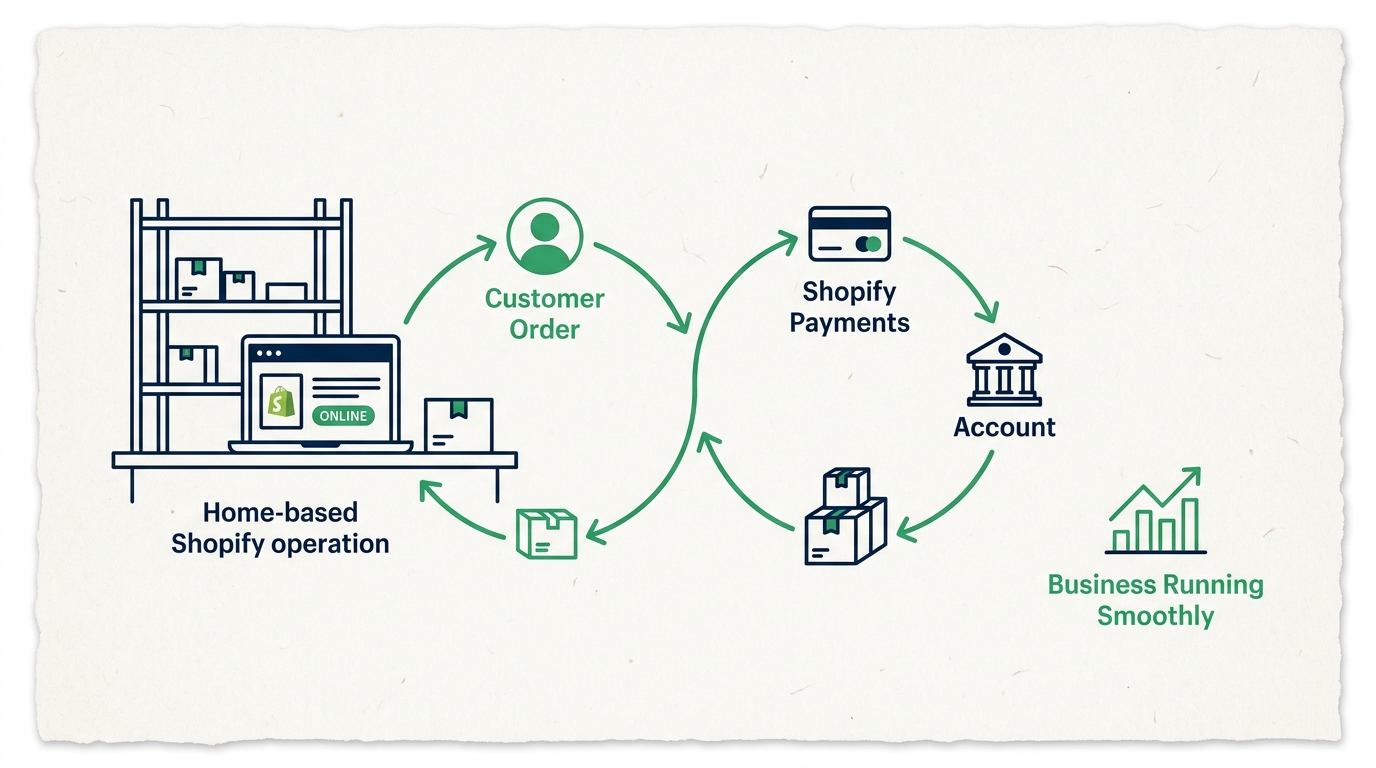
At this stage, there’s barely a gap between when a sale happens and when the cash lands, and barely a gap between when a bill is owed and when it’s paid. Inventory purchases are small and infrequent enough that a big restock doesn’t distort the picture for more than a week or two. There’s one payment processor, one payout schedule, and no meaningful backlog of orders that have been placed but not yet shipped. In this environment, cash accounting is not a simplified version of the truth. It is the truth.
The problem isn’t that cash accounting is a “beginner” method that sophisticated businesses graduate out of, the way training wheels come off a bike. The problem is that the assumptions cash accounting depends on — small purchases, short timing gaps, one revenue stream, one bank account — are exactly the assumptions that growth breaks first. And they tend to break quietly, one at a time, long before a founder notices the reports have stopped telling the truth.
The First Warning Sign Most Shopify Stores Miss
The earliest sign isn’t a big, dramatic swing. It’s something smaller and easier to explain away: a founder starts noticing that monthly profit doesn’t seem to track with how the business actually feels. Sales are up, the team is busy, customers are happy, and yet the “profit” number on the P&L bounces around in ways that don’t match any of that. One month looks great for no clear reason. The next month looks terrible for no clear reason. Founders usually explain this away as “seasonality” or “just how ecommerce is,” and move on.
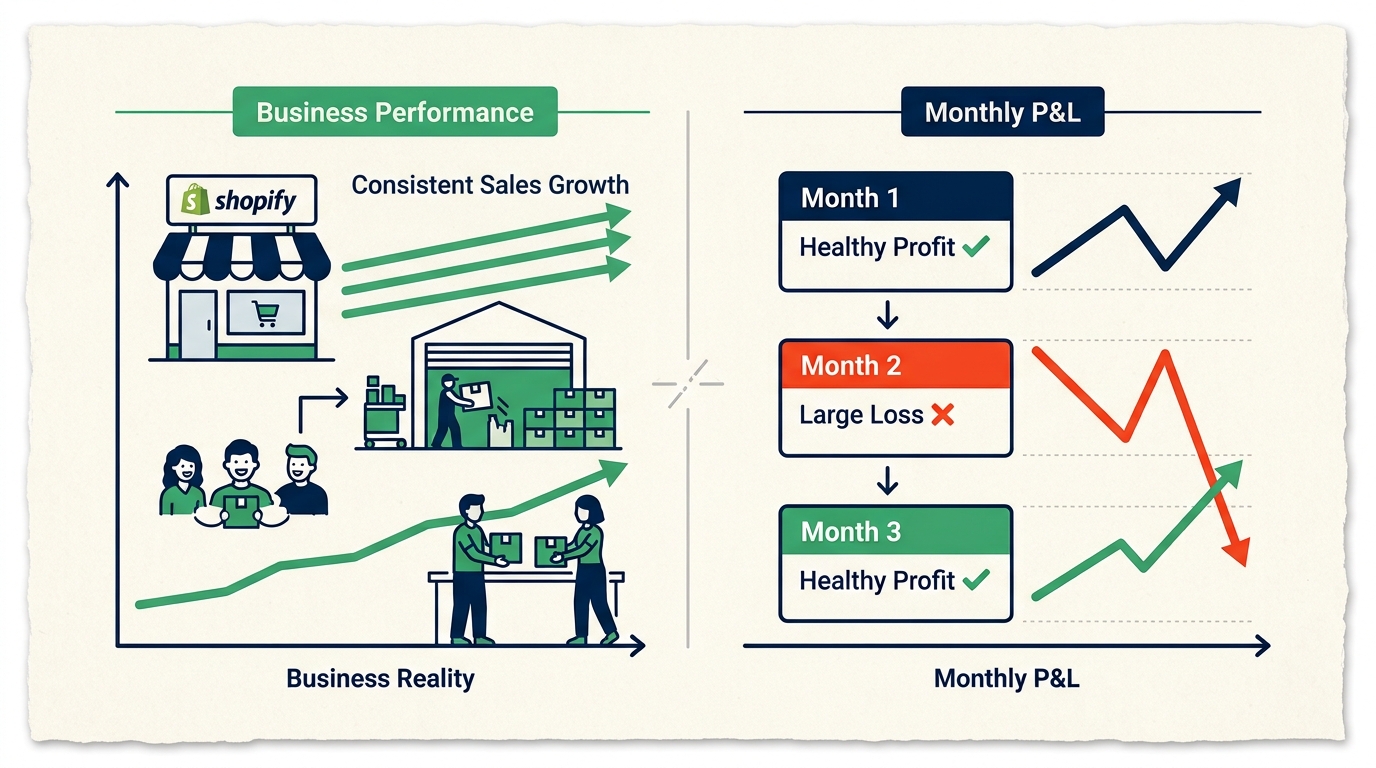
That bounce is rarely seasonal. It’s usually the first visible symptom of timing mismatches that cash accounting can’t handle — a large inventory payment landing in the same month as a slow sales period, or a big sales month where most of the revenue hasn’t actually hit the bank account yet because of how the payment processor settles funds. The report isn’t reflecting the business getting better or worse. It’s reflecting when money happened to move, which is a completely different question.
Most founders don’t catch this early because there’s no single moment where it announces itself. It shows up first as “our numbers are just noisy,” and by the time it’s serious enough to notice clearly, it’s usually already affecting decisions — a hiring plan that got delayed because a month “looked bad,” or an inventory order that got approved because a month “looked good,” when neither month’s report had much to do with the underlying health of the business.
Inventory Changes Everything
Of every factor that eventually breaks cash accounting, inventory is the biggest and the earliest to arrive for a physical-product Shopify business. This is the point worth sitting with, because it’s the one most founders misunderstand even after someone’s tried to explain it to them.
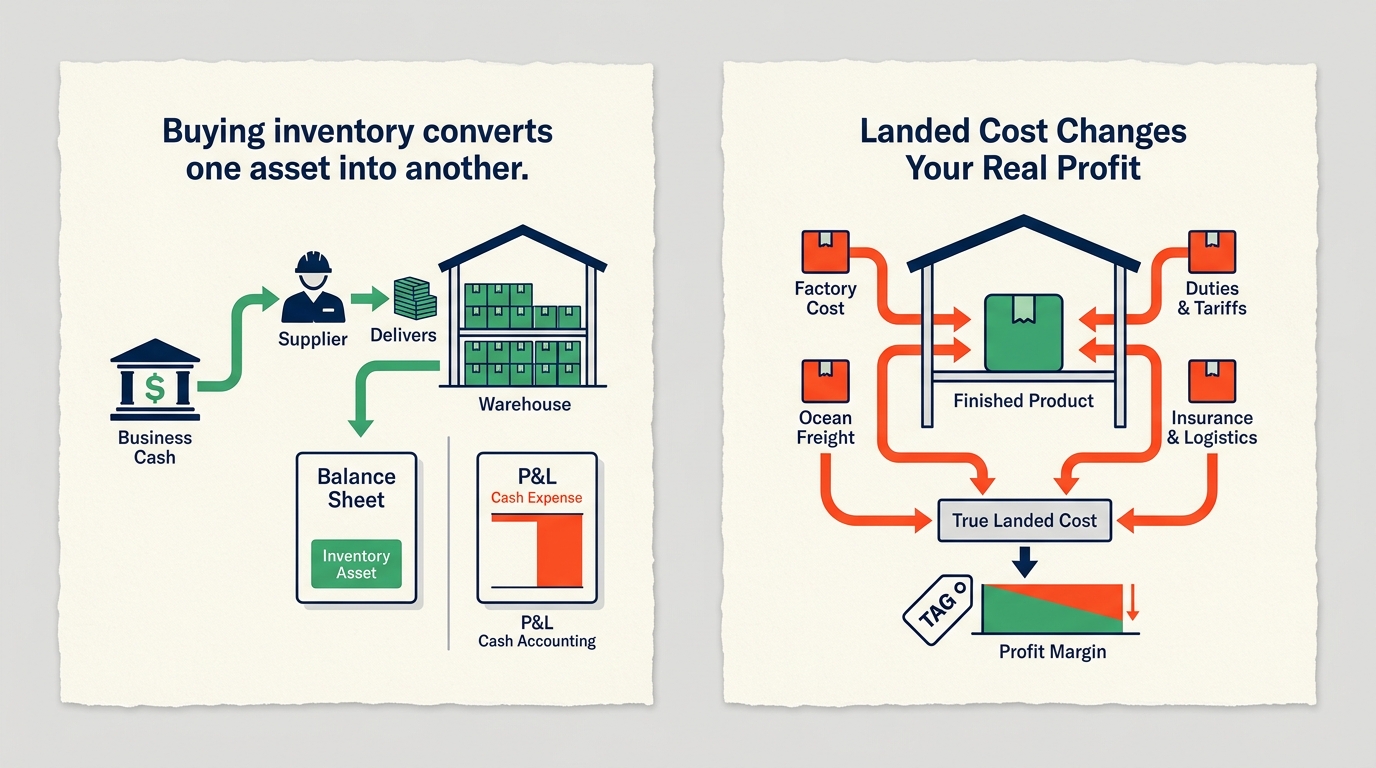
When four hundred thousand dollars of inventory is ordered ahead of Black Friday, that money is not gone. It hasn’t disappeared into an expense. It has converted from cash sitting in a bank account into a product sitting on warehouse shelves, and that product is worth roughly what was paid for it — arguably more, once it’s priced and ready to sell. Under cash accounting, though, none of that nuance exists. The moment the supplier is paid, the full amount hits the books as an expense, all at once, in that single month. The P&L doesn’t have a way to say “this is now an asset waiting to become revenue.” It only knows how to say “cash left the building,” so it reports the entire cost as a loss in the month the payment cleared — even though the actual selling of that inventory, the part that generates real profit, might happen over the following four months.
This is why a founder can have a genuinely successful pre-holiday quarter and watch the P&L insist the business lost money. The inventory purchase and the inventory sale don’t happen in the same month, sometimes not even in the same quarter, and cash accounting has no mechanism for connecting the two. It just reports whichever side of the transaction happened to occur in cash during that particular window.
Accrual accounting handles this differently, and this is the one piece of technical mechanics worth actually understanding, because it changes how a founder should read every report going forward. Under accrual accounting, that four hundred thousand dollars doesn’t hit the P&L as an expense when the supplier is paid. It sits on the balance sheet as inventory — an asset — until each unit is actually sold. Only then does a portion of that cost move over to the P&L as cost of goods sold, matched against the revenue from that same sale, in the same period. The expense and the revenue it produced show up together, which is the entire point: the report is supposed to tell a founder whether selling the product was profitable, not just whether a bill got paid that month.
Landed cost makes this even more consequential because most founders are working with an incomplete number even before timing gets involved. The “cost” of a product isn’t just what the factory charges. It’s the factory price plus freight, plus duties and tariffs, plus insurance, plus whatever it costs to get that unit from the supplier’s dock to a shelf that can actually fulfill an order. A founder who prices and margin-checks using only the unit cost from the supplier invoice is working from a number that’s frequently understated — sometimes significantly — which means the “profitable” price they set might be thinner than they think, and the inventory sitting in the warehouse is worth less margin than the spreadsheet suggests. Cash accounting doesn’t fix this problem, but it does compound it, because it never forces anyone to sit down and connect a specific batch of inventory cost to the specific revenue it eventually produces. Accrual accounting, by its nature, forces that connection to happen every single month.
Why Shopify Payout Timing Distorts Monthly Profit
Inventory is the first crack. Payout timing is the second, and it’s the one that’s specific to how Shopify — and ecommerce generally — actually moves money.
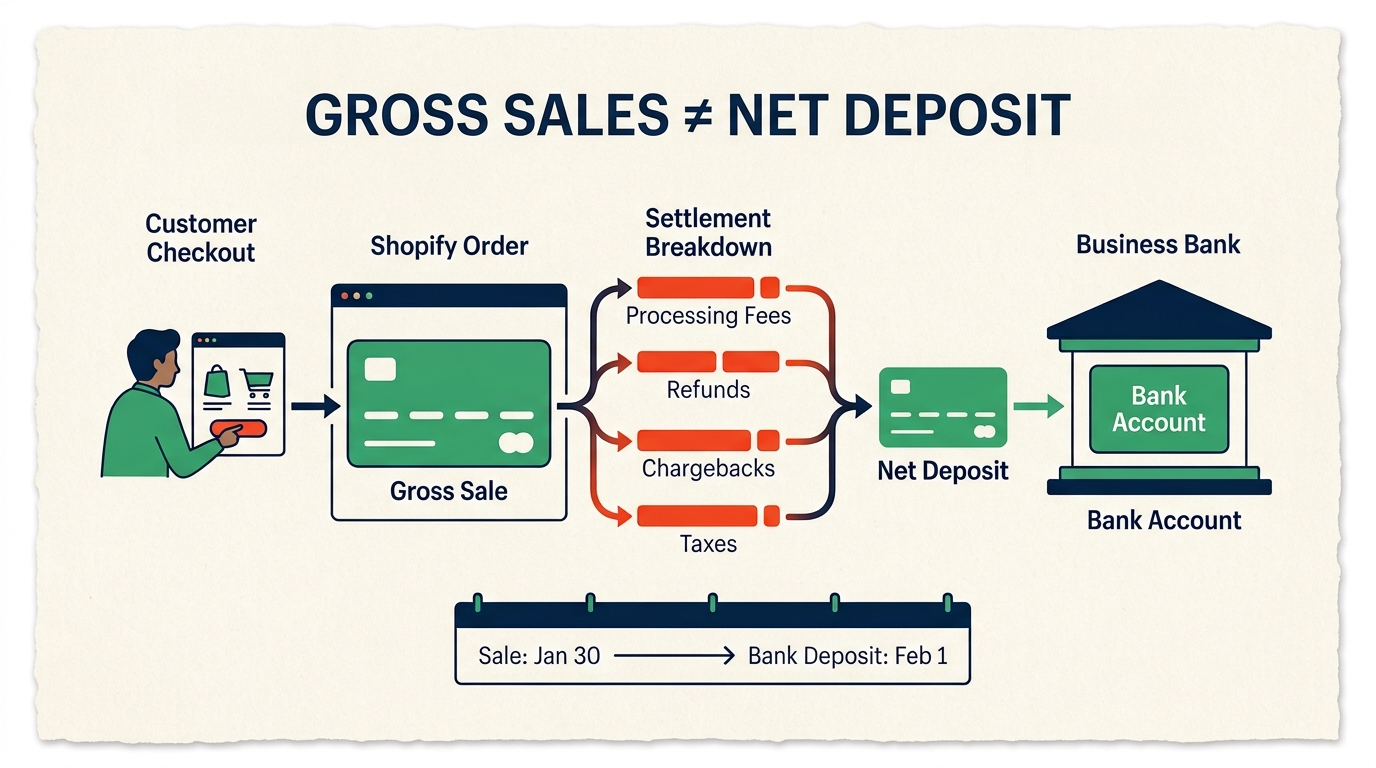
Shopify does not pay out gross sales. When a customer completes a purchase, the amount that eventually lands in the business’s bank account has already had Shopify’s processing fees deducted, along with any refunds, chargebacks, and adjustments netted out. What arrives in the bank is a net settlement, not the sale amount, and it typically arrives a day or more after the sale itself — sometimes longer around holidays or for stores on a rolling reserve. A founder or bookkeeper who simply records “what hit the bank” as revenue is working from a number that already has fees quietly baked out of it and is shifted in time from when the actual sale happened.
This sounds like a small technical detail, but it changes two things that matter enormously to how a business reads its own performance. First, it understates gross revenue and hides the cost of payment processing entirely — the fees never show up as a visible expense line, because they were subtracted before the money was ever recorded, which means the P&L looks artificially clean and the real cost of accepting payments is invisible. Second, it shifts revenue across month-end boundaries. A surge of sales on the 29th and 30th of the month might not settle into the bank account until the 1st or 2nd of the following month, which means that month’s report understates what actually happened, and next month’s report gets a boost that has nothing to do with next month’s sales.
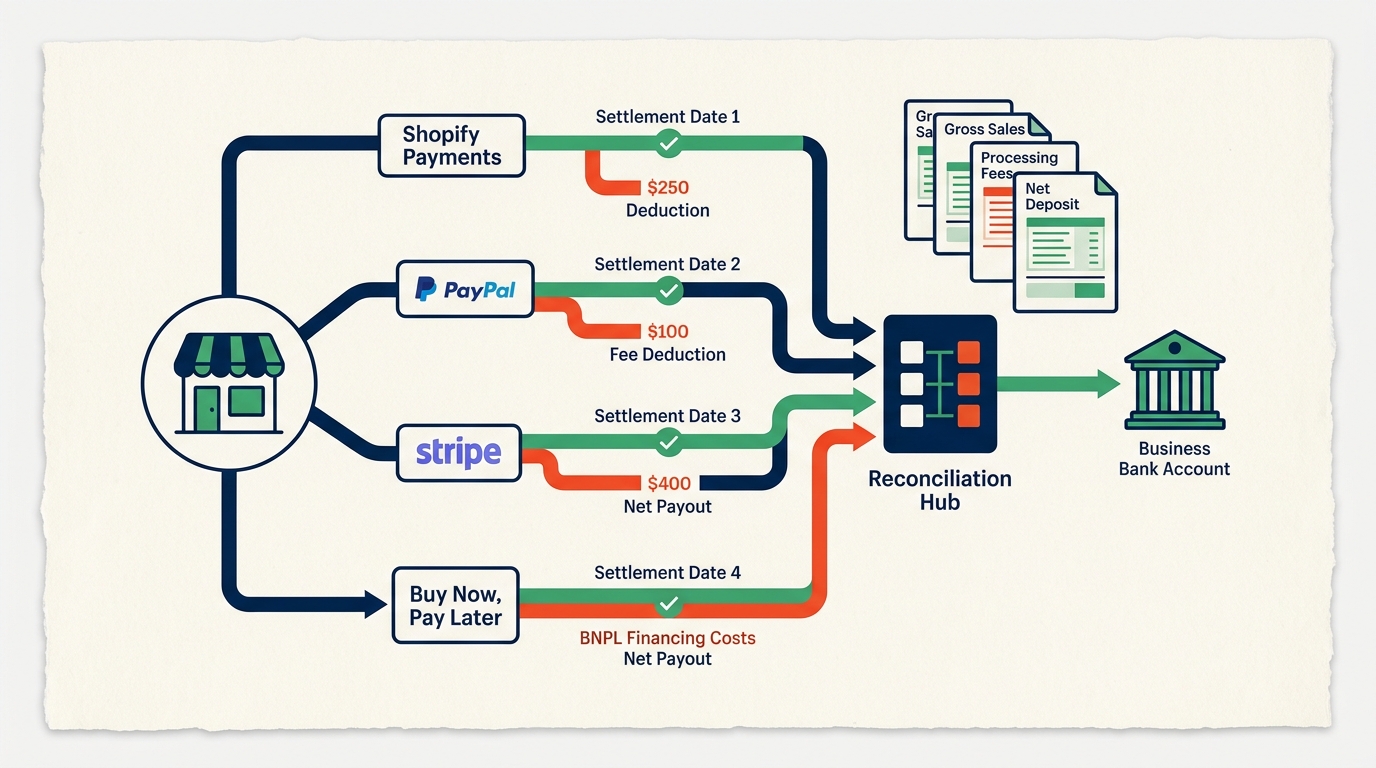
Add multiple payment processors — Shopify Payments for some volume, Stripe or PayPal for another slice, maybe Klarna or Afterpay for buy-now-pay-later orders — and the timing gaps stop lining up with each other. Each processor settles on its own schedule, nets its own fees differently, and reports in its own format. Trying to understand “how did we actually do this month” by looking at what landed in the bank from four different sources, each with a different lag, is close to impossible without a system built specifically to reconcile it.
This is also where the tools matter more than most founders realize. A native Shopify-to-QuickBooks connection, or a bookkeeper manually entering payout deposits, tends to record the net amount that arrived in the bank and calls it revenue. A properly configured setup — using a reconciliation tool built for this exact problem — pulls the full settlement detail and posts gross sales, fees, refunds, and taxes as separate line items, so the P&L shows what was actually sold, what it actually cost to process, and what actually landed, as three distinct numbers instead of one blended one. The difference isn’t cosmetic. It’s the difference between a founder seeing their real gross margin and a founder seeing a number that’s already had an unknown amount of information stripped out of it before they ever looked at it.
Buy-now-pay-later options add one more layer worth naming directly, since they’ve become common enough on Shopify checkouts that most growing stores run at least one. When a customer pays with a service like Klarna or Afterpay, the store often receives its funds up front, in full, while the customer pays the provider back over time. That’s good for cash flow, but it creates its own accounting question: the fee the provider charges for fronting that money needs to be recorded as an expense in the period the sale happened, not whenever it happens to get deducted, and any refund on a BNPL order needs to be tracked back through the provider correctly so the store isn’t quietly absorbing a cost that was actually the provider’s to bear. It’s a small detail on any single order. Across a few thousand orders a year, it’s the kind of thing that quietly moves gross margin by a meaningful amount if nobody’s watching it closely.
The Business Decisions That Start Going Wrong
None of this would matter much if it just made the reports slightly inaccurate. What actually makes it matter is that founders use these reports to make real decisions, and a report that’s telling the wrong story quietly starts producing the wrong decisions — not occasionally, but as a pattern, month after month, in the same direction.
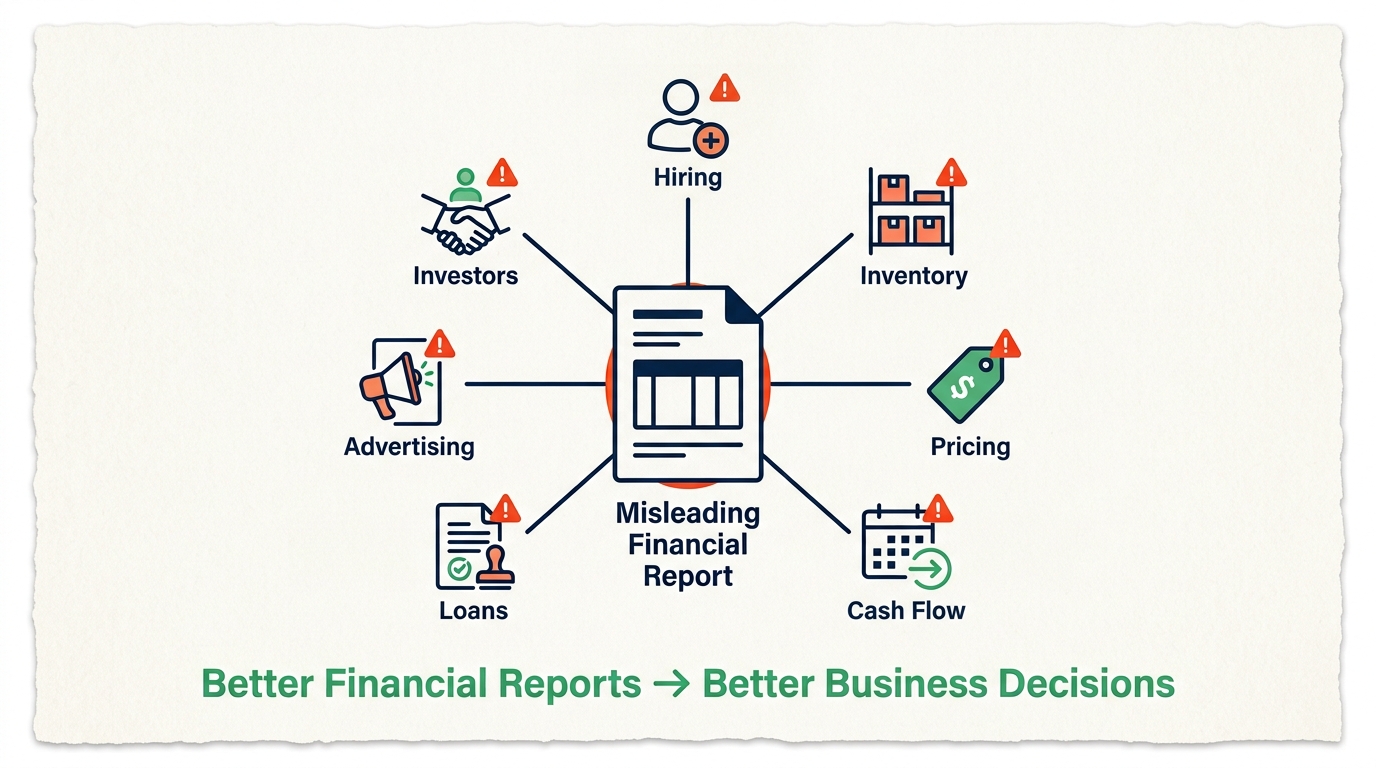
Hiring
We’ve seen founders delay a hiring decision — sometimes cancel it outright — because a month “looked bad,” when the actual cause was a large inventory payment landing in the same period as a normal sales month. The business could have supported the hire. The report said otherwise, because it was reflecting a cash outflow that had nothing to do with ongoing operating performance. The opposite happens too: a founder greenlights a hire off the back of an unusually strong cash month that was really just a delayed payout catching up, not a genuine step-change in the business’s ability to support new payroll.
Advertising
Ad spend decisions are especially vulnerable to this distortion because they’re often made weekly, sometimes daily, off whatever number is easiest to check. A founder watching bank balance as a proxy for performance will cut spend the moment cash looks tight — even if that tightness is fully explained by a supplier payment or a slow settlement week — and increase spend when cash looks flush, even if that’s just timing. Ad spend decisions made on cash noise instead of actual unit economics tend to create exactly the wrong pattern: pulling back right when a channel is working, and pushing harder right when it isn’t.
Inventory Purchasing
This is the most direct feedback loop, because inventory purchasing and cash accounting distortion feed each other. A founder who’s watching cash-basis “profit” dip every time they place a large order starts, understandably, hesitating to place large orders — even when the underlying unit economics clearly justify it. That hesitation shows up as stockouts during peak season, which is a worse outcome than the temporary cash dip that caused the hesitation in the first place. The report is punishing exactly the behavior — buying enough inventory to meet demand — that the business needs most.
Pricing
Pricing decisions run on margin, and margin is only real if COGS is calculated correctly and matched to the right period. A founder pricing off landed cost that’s missing freight and duties, evaluated against a P&L that’s mixing up which month’s inventory purchase relates to which month’s sales, is working from a margin number that could be wrong in either direction — sometimes thinner than it looks, sometimes healthier than it looks, and there’s no way to know which without accurate matching.
Cash Flow Planning
Ironically, the method built around tracking cash is often the worst tool for actually planning cash flow. Cash accounting shows what happened to cash historically, but it does nothing to show what’s coming — a founder can’t see the upcoming supplier payment, the payout that’s still settling, or the seasonal dip in collections, because none of that is structured into the reporting. Real cash flow planning requires knowing what’s owed and what’s expected, which is exactly the accounts-payable and accounts-receivable information cash accounting doesn’t track.
Loans
Lenders read financials to understand whether a business can service debt reliably, and a cash-basis P&L that swings wildly month to month based on inventory payment timing doesn’t answer that question — it just adds noise a lender has to work around, or worse, misreads as instability. A genuinely healthy business can look, on paper, like one with wildly inconsistent performance, purely because of when purchases happened to clear. Some founders respond to this by avoiding inventory financing entirely, even when it’s the cheapest capital available to them, simply because they don’t trust their own numbers enough to sit across from a lender with confidence. That’s not really a financing decision anymore. It’s a trust-in-the-reports decision wearing a financing decision’s clothes.
Investors
This is where the gap becomes hardest to paper over. Investors and acquirers expect accrual-based financials because that’s the framework that actually shows revenue earned and expenses owed, independent of when cash happened to move. A founder walking into a raise or a sale process with cash-basis books built around inventory purchase timing is handing over financials that don’t match what any serious buyer or investor is trained to read, and that mismatch tends to surface at the worst possible moment — during diligence, when trust is already fragile.
When Cash Accounting Starts Costing Real Money
At some point, this stops being a reporting inconvenience and becomes an actual compliance and tax question, not just a strategic one.
The IRS doesn’t leave “which method should I use” entirely up to a growing business’s preference forever. Under the tax code’s gross receipts test, a business with average annual gross receipts above a set threshold over the prior three tax years is generally required to use the accrual method, not permitted to keep using cash. That threshold is indexed for inflation and creeps up slightly each year — for 2025 it sat at thirty-one million dollars, moving to roughly thirty-two million for 2026 — but the direction of travel matters more than the exact figure: once a business crosses it, cash accounting isn’t a choice anymore; it’s a filing requirement.
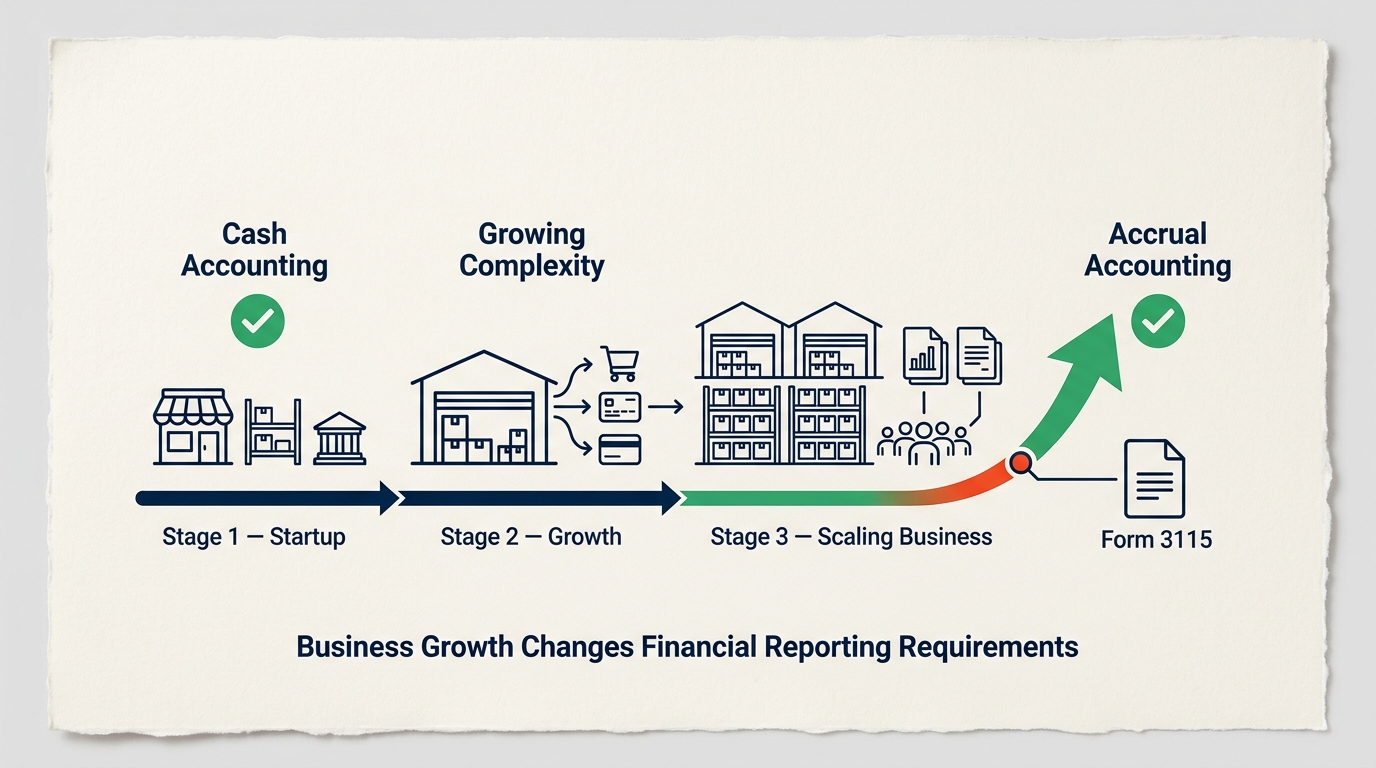
Even below that hard threshold, plenty of businesses that carry meaningful inventory find they’re required — or strongly better served — to account for inventory under an accrual-based system for tax purposes, specifically because IRS rules around inventory and cost capitalization assume an accrual framework for any business where inventory is a material part of how income is produced. This is a separate trigger from the overall gross receipts test, and it catches inventory-heavy Shopify brands earlier than founders often expect, because “average gross receipts” and “material inventory” are two different tripwires, not one.
When a business does need to switch — whether by choice or because it’s crossed a threshold — that transition isn’t as simple as flipping a setting in QuickBooks. It requires filing Form 3115, Application for Change in Accounting Method, with the IRS. This form exists because switching methods creates a real accounting gap: money that was never counted under the old method, or counted twice, has to be reconciled so nothing falls through the cracks or gets taxed twice. That reconciliation is called a Section 481(a) adjustment, and it works in a specific, useful-to-understand way. If the switch results in additional income that hadn’t been recognized before — often the case when moving from cash to accrual, since accounts receivable and inventory suddenly count as economic activity that wasn’t previously taxed — that additional income is generally spread across four tax years rather than hitting all at once, which softens the cash impact of the change. If the adjustment runs the other direction and reduces taxable income, that benefit is typically taken in full, immediately, in the year of the change.
Many cash-to-accrual switches qualify as “automatic changes” under the IRS’s published guidance, meaning the business doesn’t have to wait for advance approval — it files Form 3115 along with its timely-filed tax return for the year of the change, sends a signed duplicate to the IRS, and the change takes effect. Some situations require non-automatic, advance-consent filings instead, which take longer and involve more back-and-forth. Either way, the filing isn’t optional once the underlying rules require the switch, and skipping it isn’t a quiet workaround — it exposes the business to penalties and, functionally, treats the year as filed under the wrong method entirely.
None of this is meant to turn a business decision into a tax scare story. It’s meant to make one point clearly: by the time the IRS forces the switch through a gross receipts threshold, a business has usually already been making months, sometimes years, of hiring, pricing, and inventory decisions on numbers that didn’t reflect reality. The tax filing requirement isn’t the real cost. It’s just the moment the mismatch becomes impossible to ignore.
How Accrual Accounting Actually Changes Decision-Making
The shift to accrual isn’t really about satisfying an IRS threshold or checking a compliance box. Its actual value shows up in what a founder can suddenly see that they couldn’t see before.
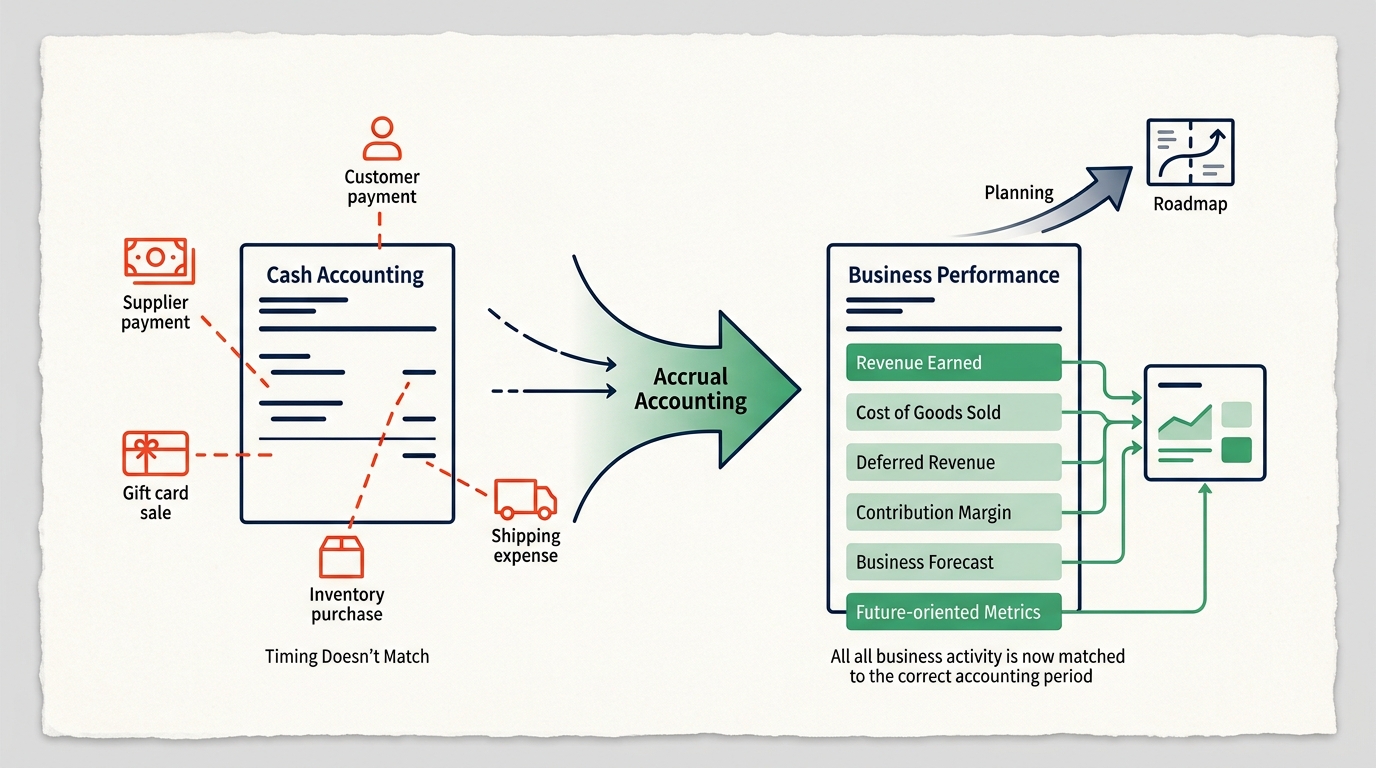
Under accrual accounting, a monthly P&L stops being a record of “what happened to cash this month” and starts being a record of “how the business actually performed this month” — revenue matched to the period it was earned, cost of goods matched to the period the related sale happened, expenses matched to when they were incurred rather than when they were paid. A founder can look at October’s numbers and know that what they’re seeing reflects October’s actual selling activity, not a supplier payment that happened to clear in October for inventory that won’t sell until December.
This changes the texture of month-end close itself. Instead of closing the books by confirming the bank balance is right, closing the books under accrual means reconciling revenue by channel, matching COGS to units actually sold that month, accruing for expenses that were incurred but not yet billed, and confirming that deferred revenue — gift cards sold but not redeemed, pre-orders taken but not yet shipped, subscription boxes billed before the product goes out — is sitting correctly on the balance sheet rather than being counted as this month’s income before it’s actually been earned.
Gift cards are a clean example of why this matters, because they show exactly the kind of revenue-timing question cash accounting simply can’t answer correctly. When a customer buys a gift card, that’s not revenue yet — it’s a liability, an obligation to eventually deliver product. Revenue only gets recognized when the card is redeemed, and current accounting standards even require a business to estimate and recognize a portion of gift cards that will likely never be redeemed at all — a concept called breakage — proportionally, based on historical redemption patterns, rather than waiting years to write it off. A cash-basis system has no framework for any of this. It either counts the gift card sale as revenue the moment cash comes in, which overstates revenue against goods not yet delivered, or ignores the nuance of breakage entirely, which understates revenue the business has legitimately earned. Subscription boxes and pre-orders create the same category of problem in a different shape: money collected in one month for product that ships in a future month isn’t this month’s revenue, no matter when the card was charged.
Contribution margin is where accrual-based reporting starts to actually change strategic decisions, not just clean up the bookkeeping. Once revenue and COGS are properly matched by period and by channel, a founder can finally see which products, and which sales channels, are genuinely profitable after variable costs — not gross margin in the abstract, but the actual dollars left over after product cost, payment processing fees, and fulfillment cost, per unit, per channel. That’s the number that should drive where ad spend goes, which SKUs get restocked aggressively versus phased out, and which channel expansion actually made the business more profitable versus just more busy. None of that visibility is possible on a cash basis, because cash accounting was never built to answer “which of these decisions made money” — only “how much cash do we have right now.”
There’s also a quieter, less obvious shift that happens once a founder has been running accrual reports for a few consecutive months: they stop treating the P&L as a mystery to be interpreted after the fact and start treating it as a planning tool they can look forward with, not just backward. A founder who trusts that October’s numbers reflect October’s actual performance can look at three consecutive months of accrual-based contribution margin and make a real forecast — not a guess dressed up as a forecast, but an actual projection built on numbers that behave consistently from month to month. That consistency is the thing cash accounting can never offer, no matter how carefully it’s maintained, because the underlying inputs — when a bill happened to get paid, when a payout happened to settle — are inherently unpredictable in a way that has nothing to do with how the business is actually performing.
Should Every Shopify Store Switch?
The honest answer is no — not every store, and not on the same timeline. But there’s a real, specific set of signals worth watching for, and most founders miss all of them until they’ve already stacked up.
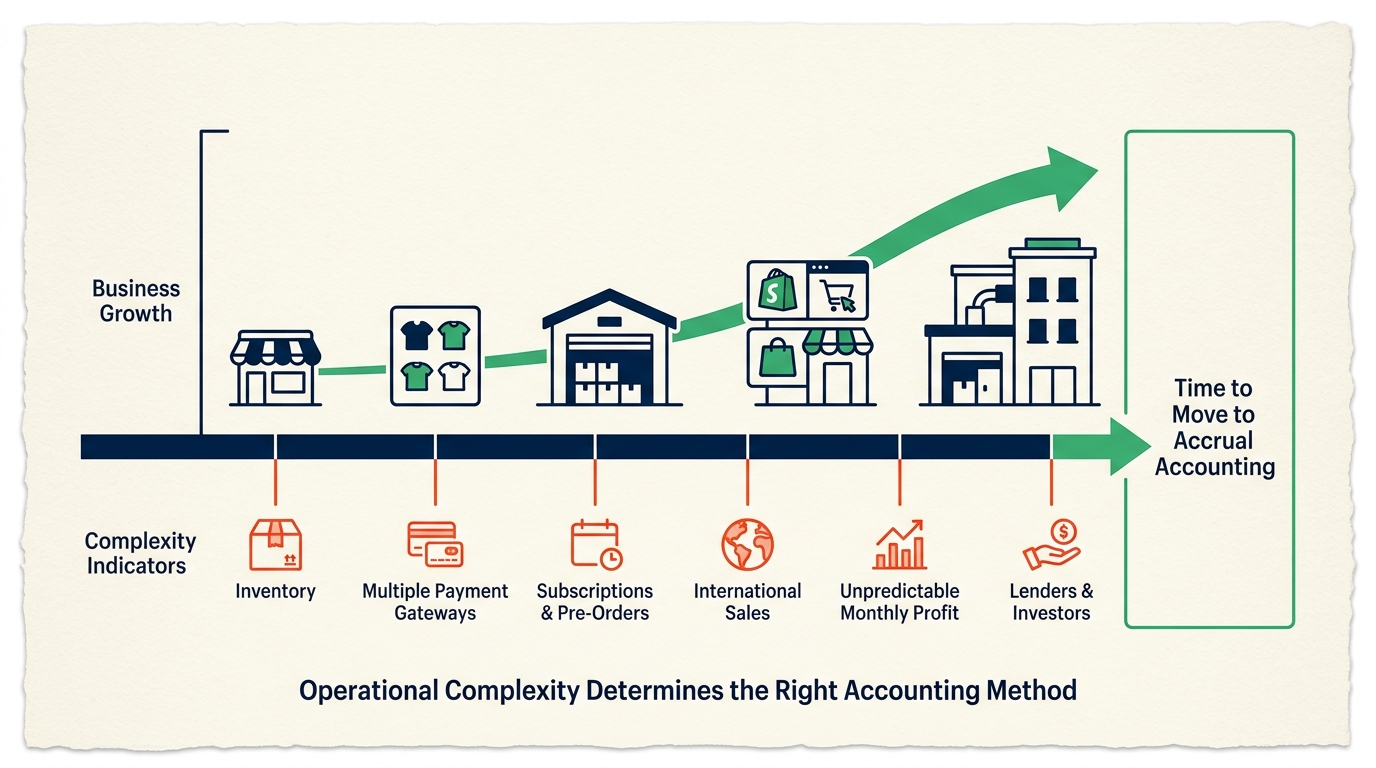
Revenue is the most obvious marker, but it’s a weaker signal on its own than most founders assume. A seven-figure Shopify store selling a single low-complexity product through Shopify Payments alone, with modest inventory levels turning over quickly, can often run cash-basis reporting further into its growth than people expect, simply because the timing gaps stay small. Revenue matters less than what’s actually driving the business’s operational complexity.
Operational complexity is the real signal, and it shows up well before any specific revenue milestone. A business carrying meaningful inventory — enough that a single restock materially changes a month’s cash position — has almost certainly already outgrown cash accounting’s ability to tell the truth, regardless of what the topline revenue number says. This is often the very first and clearest trigger, arriving earlier than most of the others.
Multiple payment gateways compound the problem fast. The moment a business is running Shopify Payments alongside Stripe, PayPal, or a buy-now-pay-later provider like Klarna or Afterpay, reconciling “what actually happened this month” from bank deposits alone becomes close to impossible, because each processor settles on a different schedule with different fee structures.
Subscription products and pre-orders introduce deferred revenue as a structural, ongoing feature of the business rather than an occasional edge case — and deferred revenue is one of the clearest examples of something cash accounting cannot represent correctly at all, not just imperfectly.
International sales add currency timing and multi-jurisdiction complexity on top of everything else — sales made in one currency, settled in another, on a delay, create exactly the kind of timing mismatch that has already been described throughout this piece, just with an extra layer of exchange-rate variability stacked on top.
And then there are the practical warning signs — the ones that show up in how a founder actually experiences the business, rather than in any spreadsheet. Monthly profit that swings in ways nobody on the team can explain without a lengthy investigation. Pricing decisions that feel like guesswork because nobody fully trusts the margin number they’re working from. Hesitation to place large inventory orders specifically because of what it will “do to the numbers” this month, even when the underlying demand clearly justifies the order. A lender, investor, or potential acquirer asking for financials and receiving a visible pause in response, because the reports weren’t actually built to answer the questions they’re about to ask.
Any one of these on its own might just be a rough patch. Several of them showing up together, and persisting, is usually the clearest signal available that the business has already outgrown its accounting method — often well before it outgrows any specific revenue threshold.
It’s also worth being honest about what switching actually requires, because “you should probably be on accrual” is easy advice to give and much harder to execute cleanly. A real transition means rebuilding the chart of accounts to separate revenue, COGS, and fees by channel; establishing an inventory accounting method — FIFO, weighted average, or specific identification — that matches how the business actually buys and sells product; setting up a repeatable month-end close process that reconciles payouts, accrues unbilled expenses, and books deferred revenue correctly; and, if the switch is happening because a threshold has been crossed or because it simply should have happened already, filing Form 3115 to make the change official with the IRS rather than just quietly changing how the books look internally. None of that is a weekend project, and rushing it tends to just relocate the same reporting confusion into a more complicated system rather than actually resolving it. The businesses that make this transition well tend to treat it as a deliberate rebuild, done once, correctly — not a setting they flip and hope holds up under scrutiny.
The Real Question Isn't Cash vs. Accrual
It’s tempting to treat this as a technical choice — pick a method, move on, get back to running the business. But that framing misses what’s actually at stake.
Every growing business eventually outgrows the financial reports that once worked perfectly well for it. That’s not a failure of the founder, and it’s not a flaw in cash accounting either — cash accounting does exactly what it was built to do, for exactly the kind of business it was built for. The real issue only shows up when a business has changed shape — more inventory, more channels, more payment processors, more complex revenue timing — while its reporting method hasn’t changed to match it. At that point, the accounting method isn’t the real problem. Making major decisions — who to hire, how much inventory to buy, what to charge, how much to spend on advertising, whether to take on debt or bring in outside capital — using financial information that no longer reflects how the business actually operates is the real problem.
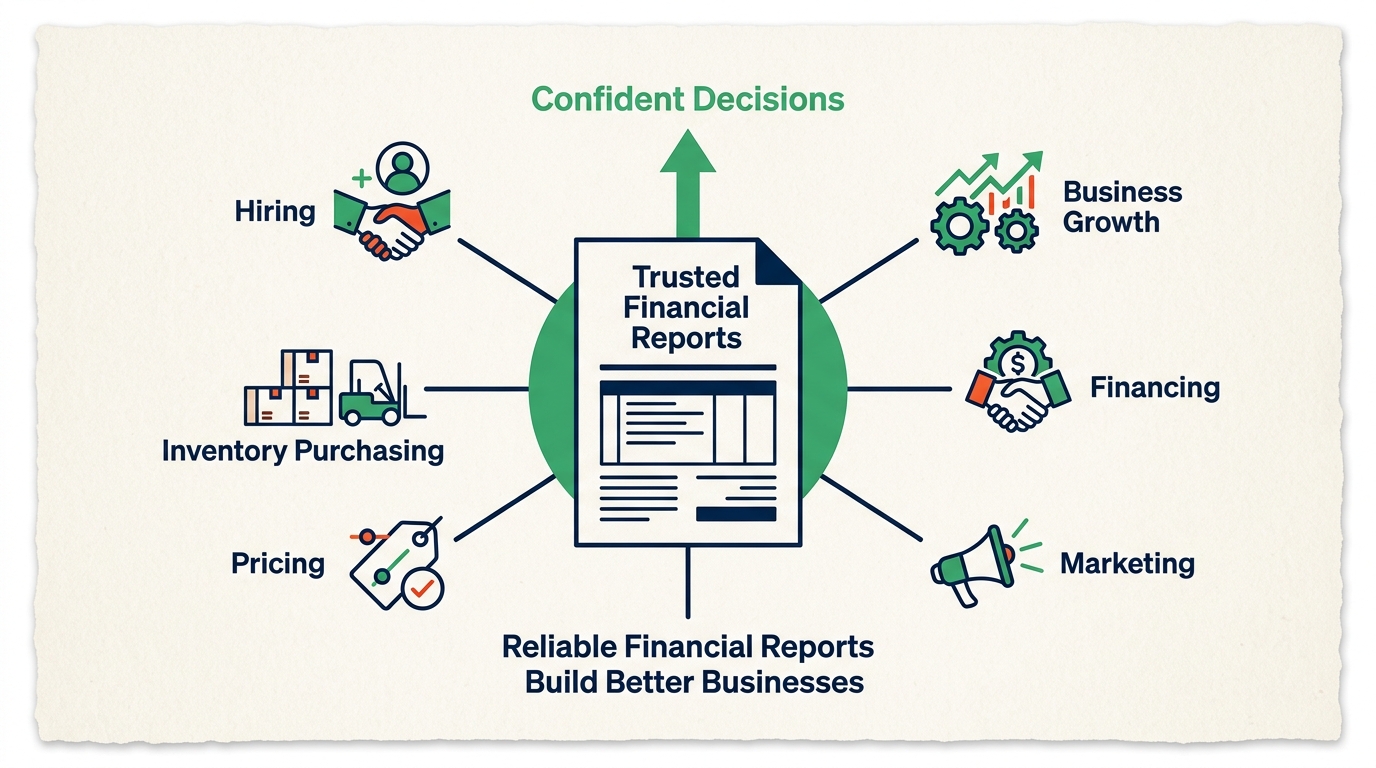
The question worth asking isn’t “should we be on cash or accrual.” It’s simpler and more direct than that: can you trust your financial reports enough to actually run your business on them? If the answer is yes, there’s no urgency here — the current setup is doing its job. If the answer is a hesitant maybe, or a list of caveats about which numbers to trust and which to mentally adjust, that hesitation is the signal. It usually means the reports and the business have already drifted apart, quietly, over a period of months, and nobody’s pointed it out yet.
That’s worth a real look — not because switching accounting methods is inherently valuable, but because knowing, with confidence, that the numbers in front of you actually describe the business you’re running is the entire foundation everything else gets built on. If it’s been a while since anyone took a close look at whether your books still reflect how your business actually operates, that’s a conversation worth having before the next big inventory order, the next hiring decision, or the next time someone outside the business asks to see your financials.